
Thursday, 26 February 2015
Time Schedule for the actual day
On the day of shooting, it can be expected that things will be somewhat hectic. therefore, we need things to be as planned out as possible. We are pretty much compressing a weeks worth of shooting into one day and hence we need to be on time and efficient.

Wednesday, 25 February 2015
Costume
How did working class women dress in the 1700's?
 At this time the whole of Ireland was under British rule. The British did not have the ragged poor of Europe. It had not had a peasant class since medieval times and this was reflected in the appearance of its people. You could tell a person’s social class by the clothes that they wore. The richer you were; the better-fitted, brighter-coloured clothes you had. Some servants received clothes as presents. They would have been cast off clothes from a master or mistress, to be worn or sold on. The poorer in society wore second hand clothing.
Clothes tended to be very well looked after. The were patched and darned until they could no longer be repaired and then it was taken apart for a new use. The clothing of the poor is difficult to trace as there are currently no surviving garments and few artists recorded what these people wore. However, some artists had painted lower-class individuals. The only thing to consider is that the artist may lie to flatter or make the painting more aesthetically pleasing. Stitching may not be painted in, colour may have been added and also oils used in the painting may have caused the painting to become worn over time.
Some garments from the 17th century exist today and they would have been expensive or valuable to the people that owned them. Original garments give construction details. The clothes of the working class are expected to have been made in similar manner of cut and tailors would have used less expensive fabric.

 Fabrics: Linen was always worn next to the skin. The working class women would more than likely been unable to keep their linen white and would have dressed in cream, grey or beige. Wool and wool mixtures were the typical material for skirts, stays and bodices. Lace was expensive and so although it was made by the poor, it was worn by the rich so we are avoiding using it in our costume.
Colours: Only natural dyes were available but they would have been able to produce a wide range of strong colours. However, the working class would have been limited in the colours that they could buy as they would not have had enough money to by clothes of a variety of colours. The dyes faded more easily then chemical dyes. Washed out muted colurs look better than harsh, strong, bright colours. People working outdoors and sleeping rough would have caused their clothes to wear faster.
 Headgear: Women tended to cover their heads unless they had enough money to have their hair dressed in a fashionable style. Many rich women wore coifs when they did not have time to fix their hair. Covering one’s head was a social convention. No hat and no hairstyle was not seen as indicating an immoral individual however, it did indicate pure laziness.
Here is a photo of a young women who is dressed in the typical clothing of a working class women in the 1700's. We can see that she is wearing clothes with noticeable colour however they are still very dull. She is also wearing hat that was typical of working class women at the time. She is carrying a bag over her shoulder that would have been used by the working class women to carry their belongings.
At this time the whole of Ireland was under British rule. The British did not have the ragged poor of Europe. It had not had a peasant class since medieval times and this was reflected in the appearance of its people. You could tell a person’s social class by the clothes that they wore. The richer you were; the better-fitted, brighter-coloured clothes you had. Some servants received clothes as presents. They would have been cast off clothes from a master or mistress, to be worn or sold on. The poorer in society wore second hand clothing.Clothes tended to be very well looked after. The were patched and darned until they could no longer be repaired and then it was taken apart for a new use. The clothing of the poor is difficult to trace as there are currently no surviving garments and few artists recorded what these people wore. However, some artists had painted lower-class individuals. The only thing to consider is that the artist may lie to flatter or make the painting more aesthetically pleasing. Stitching may not be painted in, colour may have been added and also oils used in the painting may have caused the painting to become worn over time.
Some garments from the 17th century exist today and they would have been expensive or valuable to the people that owned them. Original garments give construction details. The clothes of the working class are expected to have been made in similar manner of cut and tailors would have used less expensive fabric.
Fabrics: Linen was always worn next to the skin. The working class women would more than likely been unable to keep their linen white and would have dressed in cream, grey or beige. Wool and wool mixtures were the typical material for skirts, stays and bodices. Lace was expensive and so although it was made by the poor, it was worn by the rich so we are avoiding using it in our costume.Colours: Only natural dyes were available but they would have been able to produce a wide range of strong colours. However, the working class would have been limited in the colours that they could buy as they would not have had enough money to by clothes of a variety of colours. The dyes faded more easily then chemical dyes. Washed out muted colurs look better than harsh, strong, bright colours. People working outdoors and sleeping rough would have caused their clothes to wear faster.
Headgear: Women tended to cover their heads unless they had enough money to have their hair dressed in a fashionable style. Many rich women wore coifs when they did not have time to fix their hair. Covering one’s head was a social convention. No hat and no hairstyle was not seen as indicating an immoral individual however, it did indicate pure laziness.Here is a photo of a young women who is dressed in the typical clothing of a working class women in the 1700's. We can see that she is wearing clothes with noticeable colour however they are still very dull. She is also wearing hat that was typical of working class women at the time. She is carrying a bag over her shoulder that would have been used by the working class women to carry their belongings.
Tuesday, 24 February 2015

Monday, 23 February 2015
Possible shooting locations
First impressions are so important in the media industry as they are what either make or break the film. I think that our location should show some eerie old Irish ruins with typical greenery as a method of representation. I think that the harsh grey tones, mixed in with the average overcast day that northern Ireland sees will work will stylistically, creating a dark and serious tone and hence, presenting our overall theme. Below are a number of locations that were built before 1710 (and so are inkeeping with the authenticity of the events in our period drama) and are all around an hour away from our base location. As transport may be an issue in the forseeable future, we have to decide on our location quickly so that we can plan our transport in advance:


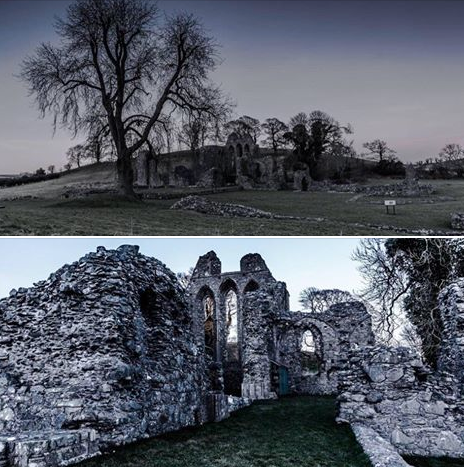


I began by contacting a very well known facebook website, who take photos of abandoned and eerie places all over northern Ireland. I decided to be proactive by contacting them and asking if they could help. They lead us to the following...
Devenish Island Monastic Site, Lough Erne, County Fermanagh
Devenish Monastic Site was founded in the 6th century by Saint Molaise on one of Lough Erne’s many beautiful islands in County Fermanagh.
During its history it has been raided by Vikings (837AD), burned (1157AD) and flourished (Middle Ages) as a parish church site and St Mary’s Augustine Priory. The island is home to ancient ruins and an impressive 12th century round tower.
Grey Abbey, County Down
Founded in 1193 by John de Courcy’s wife; Afreca, and situated within the parkland of the 18th Century Rosemount House, visitors to Grey Abbey are welcome to wander among the ruins and lawns of this breath taking abbey church.
There is also a small visitor’s centre with displays and a reconstructed ‘medieval’ physic garden.
Inch Abbey
Inch Abbey is a large, ruined monastic site 0.75 miles north-west of Downpatrick, County Down, Northern Ireland, on the north bank of the River Quoile in a hollow between two drumlins and featuring early Gothic architecture.
Ulster Folk and transport Museum
The Ulster Folk and Transport Museum is situated in Cultra, Northern Ireland, about 11 kilometres east of the city of Belfast. It comprises two separate museums, the Folk Museum and the Transport Museum.
I went so far as to contact the Ulster Folk n transport museum, however after the planning stages, we soon realised we wanted a creepy exterior as it would be more striking and because in terms of cinematography, there was much more that we could do with it. personally I am leaning more towards Inch abbey because of the cinematographic tones, and also Grey Abbey because of the old gravestones.
Research with Pinterest
Below is a 'Pinterest' that I created in accordance with my perception of general period dramas. It is somewhat like a mood board:
https://uk.pinterest.com/elliewildman9/period-dramas/
Here is one that I created in accordance with the correct costume, hair and makeup as seen suitable during the 1700s:
https://uk.pinterest.com/elliewildman9/costume-hair-and-makeup/
https://uk.pinterest.com/elliewildman9/period-dramas/
Here is one that I created in accordance with the correct costume, hair and makeup as seen suitable during the 1700s:
https://uk.pinterest.com/elliewildman9/costume-hair-and-makeup/
Timetable


Above are our timetables which are well needed for organisation during the academic year, from the view of a producer or director, organisation is key to success. We have mapped in every possible outcome, from rehersals to editing and we have tried to be as realistic as possible with timing. The next stage is to give my team a copy of this so that they show up on time in order to produce a good final outcome.
Animatic
An animatic is basically a 'filmed' storyboard.
I used the software "Animoto" to make this...
Apologies for the watermark, it's ridiculously annoying, but at £300 per year, I'll just have to endure.
I used the software "Animoto" to make this...
Apologies for the watermark, it's ridiculously annoying, but at £300 per year, I'll just have to endure.
Subscribe to:
Posts (Atom)